CYUT unveils Aviation Maintenance Training Center to boost talents
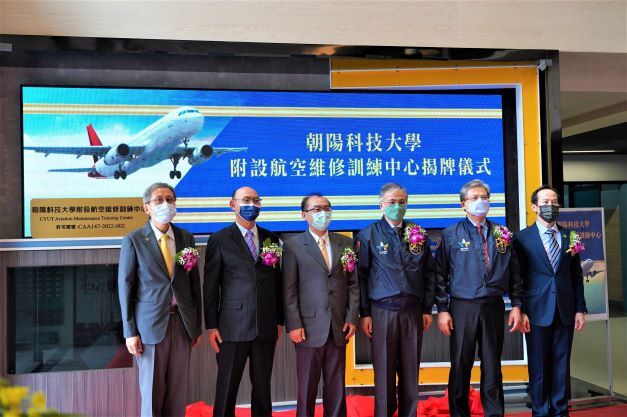
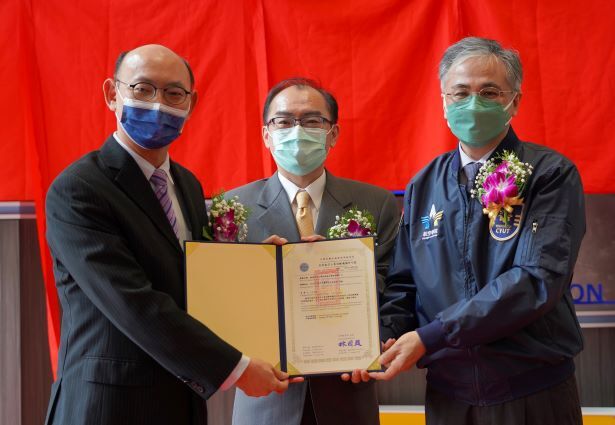
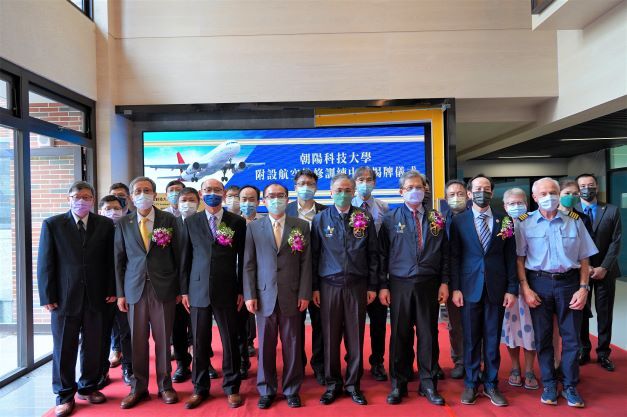
After spending almost two years preparing, CYUT has attained approval from the Civil Aeronautics Administration (CAA) of the Ministry of Transportation and Communications (MOTC) to set up the Aviation Maintenance Training Center (the Training Center). This good news indicates that CYUT is ready to forge talents for the aviation industry when the country lifts the border for travel recovery. A simple yet significant unveiling ceremony was held on 20th October with government officials participating.
The Training Center complies with TCAR 05-02A of the Civil Aviation Act to provide complete training for aircraft maintenance personnel reaching Category B1 international standards. Students will receive 2,400 hours of training to sit for 13 module examinations followed by a practical assessment. After graduation, they only have to work for two years to qualify for the B1 aircraft maintenance license. It is a shortcut to acquiring a license compared to the usual way of working for five years and studying for the module examinations on their own without support. The industry welcomes the Training Center not only because it efficiently saves time and training costs for them but also fills the manpower gap in the long run.
The College of Aviation has proved to CAA its competency and determination in forming the Training Center in terms of legal compliance, technical documentation, training facilities, and personnel capabilities. It has put in a substantial amount of time and resources in building well-equipped facilities, including the aviation fundamentals laboratory, pneudraulics workshop, aircraft electrical system workshop, engine overhaul workshop, and the coming A320 cockpit simulator. Trainers and examiners are experienced professionals with frontline maintenance and aircraft release experience. They hold maintenance licenses from various aviation authorities, including the Taiwan CAA, the Federal Aviation Administration of the United States, the European Union Aviation Safety Agency, and the Hong Kong Civil Aviation Department. Some received A350 aircraft type training overseas, enabling them to train students with updated knowledge and practical skills in line with the industry.
The College of Aviation comprises Aeronautical Engineering, Aviation Technology, and Air Transport Management. It foresees nurturing over 850 aviation talents in the coming 10 years. Given the rapid revival of the aviation industry, there will be a demand for more than 250,000 maintenance technicians in the Asia-Pacific region in the next 20 years. The Training Center will undoubtedly become a world-class aircraft maintenance teaching base.